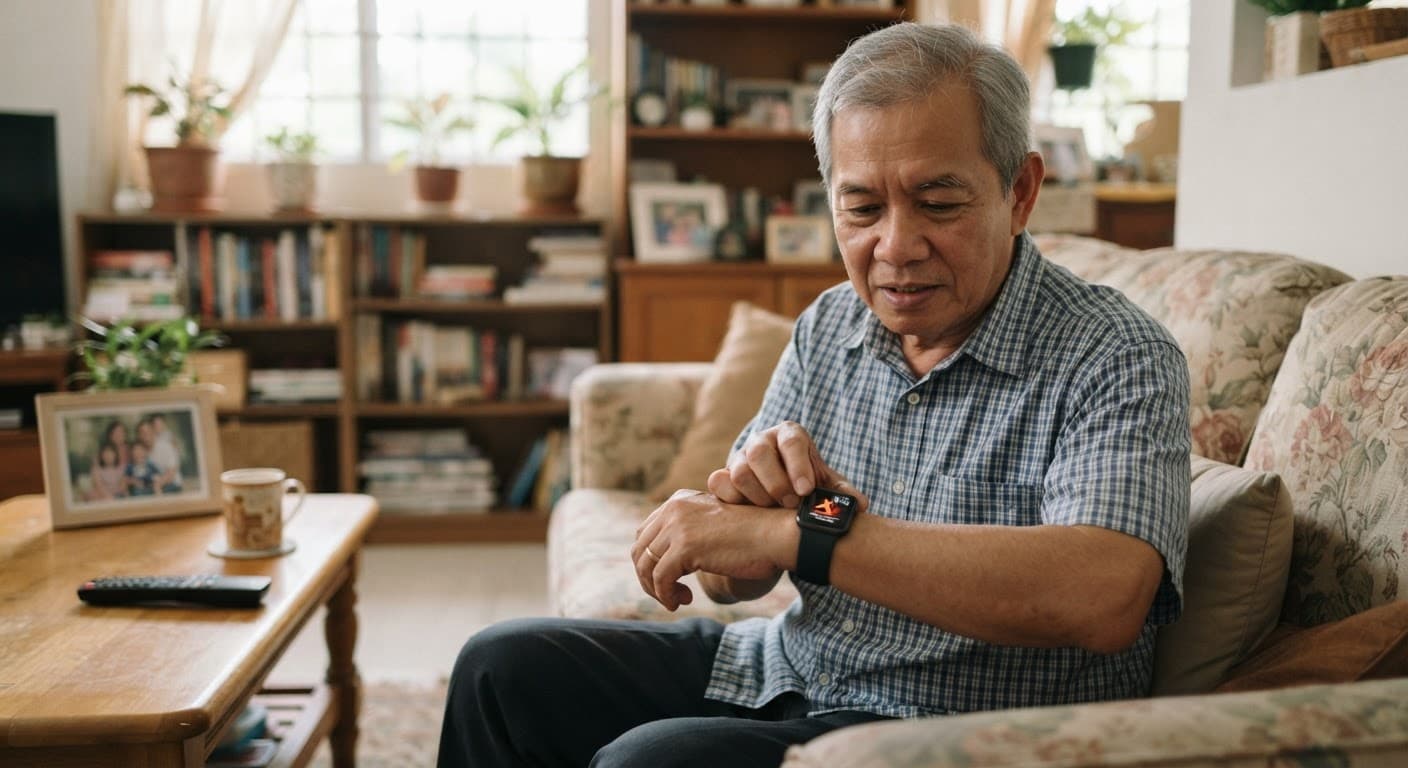
Fall detection is the feature that sells these watches to families, and it is the feature least likely to work the way you expect. We tested four models across twelve controlled falls: slow slides off a chair, a trip on a step, and a collapse onto a mat.
What we found
- Hard, fast falls were detected on all four devices within seconds
- Slow slides and controlled lowering were usually missed, and that is the most common real fall at home
- Detection worked better with the watch on the non-dominant wrist, as most manuals state
- Callback systems varied widely in how quickly a person actually answered
If someone lives alone, a pendant alarm with a monitored call centre and a 24-hour response contract often delivers more real safety than a watch, because it does not depend on the person wearing and charging a device daily. A watch is a useful addition to a plan. On its own, it is not a plan.
Questions readers ask
- Will a watch call for help on its own?
- Detection only starts the process. On every model we tested the watch raised an alert and then waited for the wearer to respond; only when they did not did it call the emergency contact. Where a fall leaves someone unconscious or unable to speak, that callback is the weak point. Confirm who answers, and how quickly, before you buy — a detection feature with nobody on the other end is not a safety net.
- What if she refuses to wear it?
- Then it does not work, which is the most common failure and the least discussed. Adherence depends on fit and on feeling independent rather than monitored. A watch suits some people; a cord pendant suits others. Choose the device together rather than presenting it, and expect to try two before one sticks.
Read next
- How to spot a scam SMS pretending to be your bank
The other technology problem families deal with most.
- More in Tech and Independence
Devices, scams and staying in your own home safely.