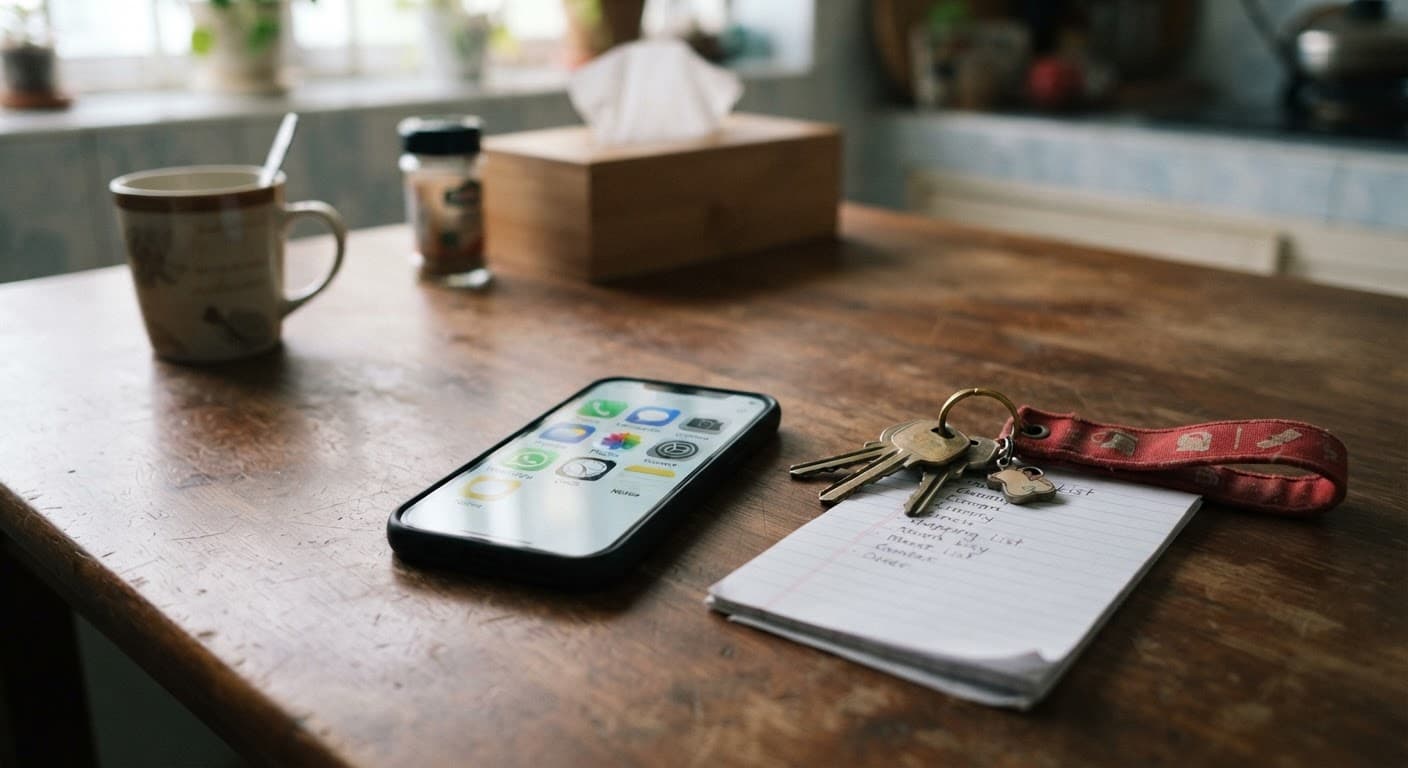
There is no need for twenty apps. Four cover the handful of tasks that genuinely matter to a household running independently — getting somewhere, getting food, paying for things and staying in touch. Each of them is only useful once it has been set up properly, which is the step most people skip.
The four that earn their place
- A ride app, with home and the clinic saved as favourite addresses and a payment method already added
- A grocery or food delivery app, with a saved address and one order placed together the first time
- A payment app connected to the bank account, with a small balance and a spending limit set
- A messaging app with family groups muted to a schedule rather than abandoned entirely
The reason an app gets abandoned is almost always a first attempt that did not work. Do the first ride, the first order and the first payment side by side, and include the failure: what happens if the driver cannot find the house, what if the order is wrong. The confidence comes from knowing the error path, not the happy one.
An app is useful the day it can be used without you in the room. Practise until that day arrives.
Questions readers ask
- What if the driver cannot find the address?
- Save a precise pin rather than a typed address — most ride apps allow it — and add a landmark in the notes, the way locals would describe it. Then show the screen to a neighbour and check it points to the right gate. An address that a delivery rider can find is an address that an ambulance can find too, which is worth more than the convenience.
- How do I keep the payment app safe?
- Keep only a small balance in the wallet, or link it to an account with a low transfer limit, and enable the app's own PIN or biometric lock. Treat it like cash in a purse: enough for the day, not the month's savings. The point of these apps is convenience, not custody of your money.
Read next
- e-Wallets and DuitNow: a plain guide for the over-50s
QR payments, top-ups and what the balance actually is.
- More in Tech and Independence
Devices, scams and staying in your own home safely.