Most Malaysian home stir-fries use two to three times the oil the dish needs, and almost none of that excess ends up in the flavour. It ends up on the plate, in the rice, and in the pot the family is trying to reduce.
Where the oil is actually doing a job
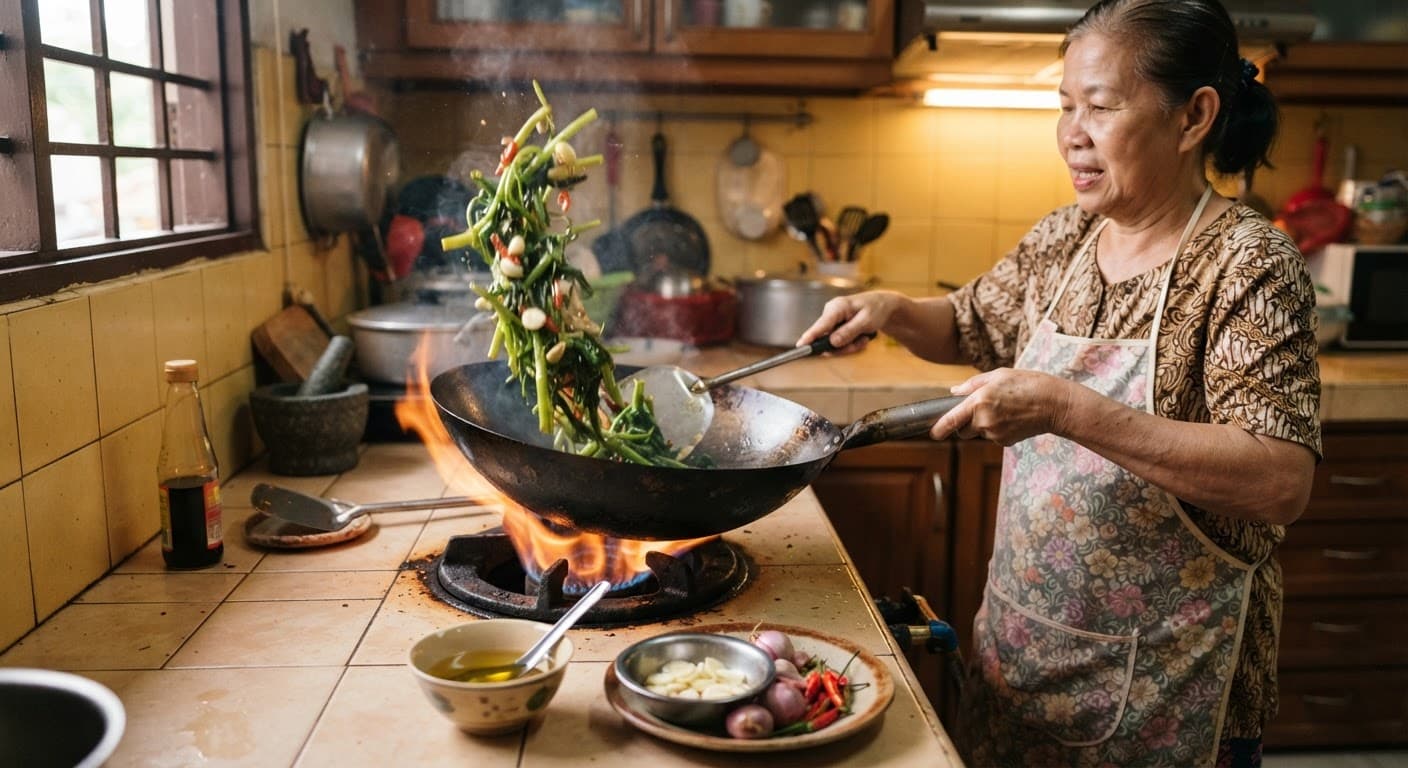
Oil does three things in a wok: it conducts heat, it stops food sticking, and it carries aromatics. Only the third of those needs much of it. A properly seasoned carbon steel wok at high heat, with the aromatics fried in a small amount of oil and the vegetables added to a hot surface, uses a third of what most kitchens pour in.
- Get the wok properly hot before anything goes in — an under-heated wok is why people add more oil
- Two tablespoons of oil is enough for aromatics for four people; the vegetables need almost none
- Cook in two batches rather than adding more oil to one crowded wok
- Splash in stock or water instead of oil when the pan looks dry
- Blanch firm vegetables first, so they need less time and less oil in the pan
None of this makes the dish taste lighter in the way a diet version does. Wok hei comes from heat and from the Maillard reaction, not from the fat — the fat runs interference. A hot, dry wok produces more of it than a cool, oily one, which is the part most people find surprising.
The flavour was never in the oil. It was in the heat, and the oil was costing you the heat.
Questions readers ask
- Which oil should I use for high-heat stir-frying?
- Something with a high smoke point that the household already uses — refined palm, peanut or ordinary cooking oil all work, and a seasoned wok needs remarkably little of any of them. Olive oil smokes before you reach the heat a proper stir-fry wants. Sesame oil is a finishing oil, added off the heat, not a frying oil.
- Can I stir-fry without any oil at all?
- You can, using stock, and it works for watery vegetables but not for anything you want to brown. A small amount of oil still earns its place for the aromatics and the searing, so the useful target is fewer tablespoons rather than none. Removing it entirely tends to produce steamed vegetables in a wok, which is a different dish.
Read next
- Where the salt hides in the Malaysian kitchen
The sauces and pastes carrying most of the daily load.
- More in Food
Malaysian cooking, adapted for the conditions that arrive with age.