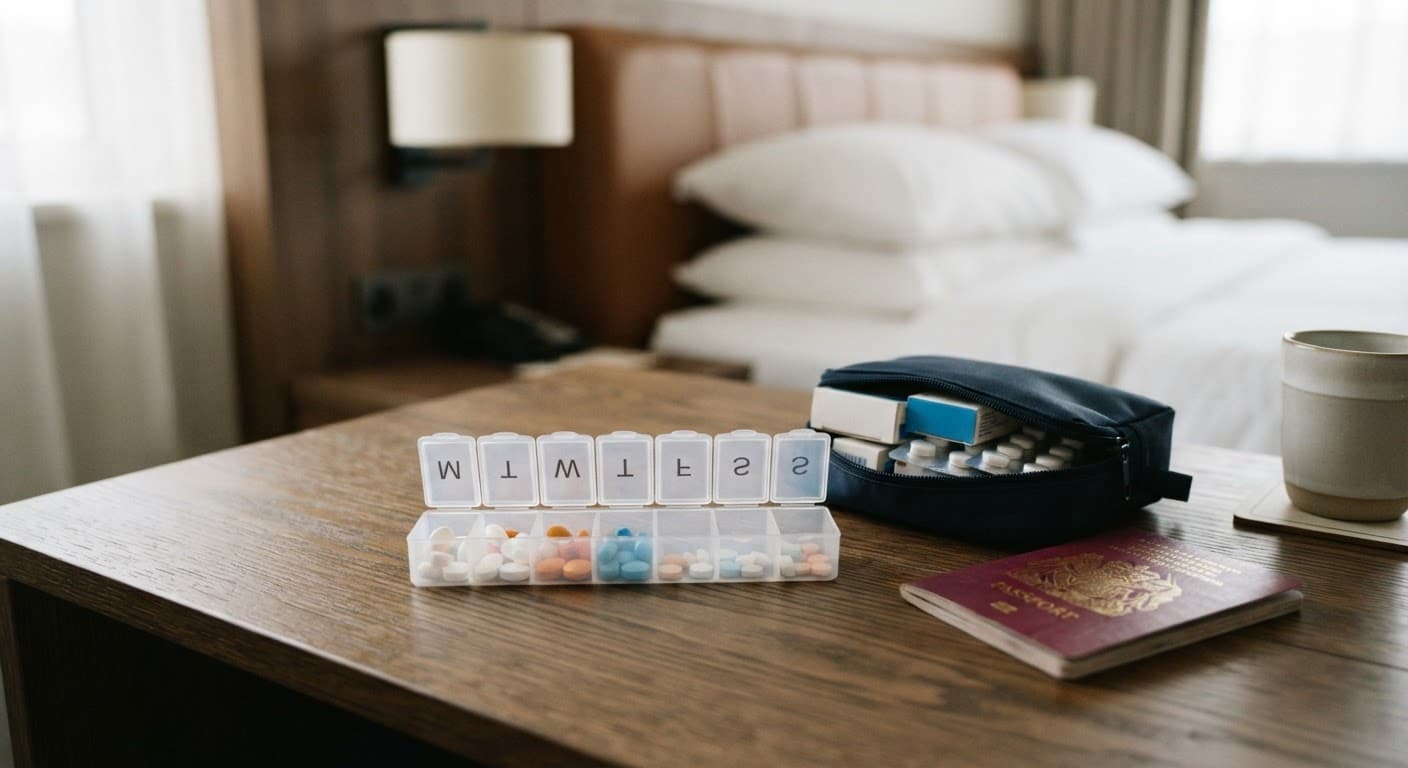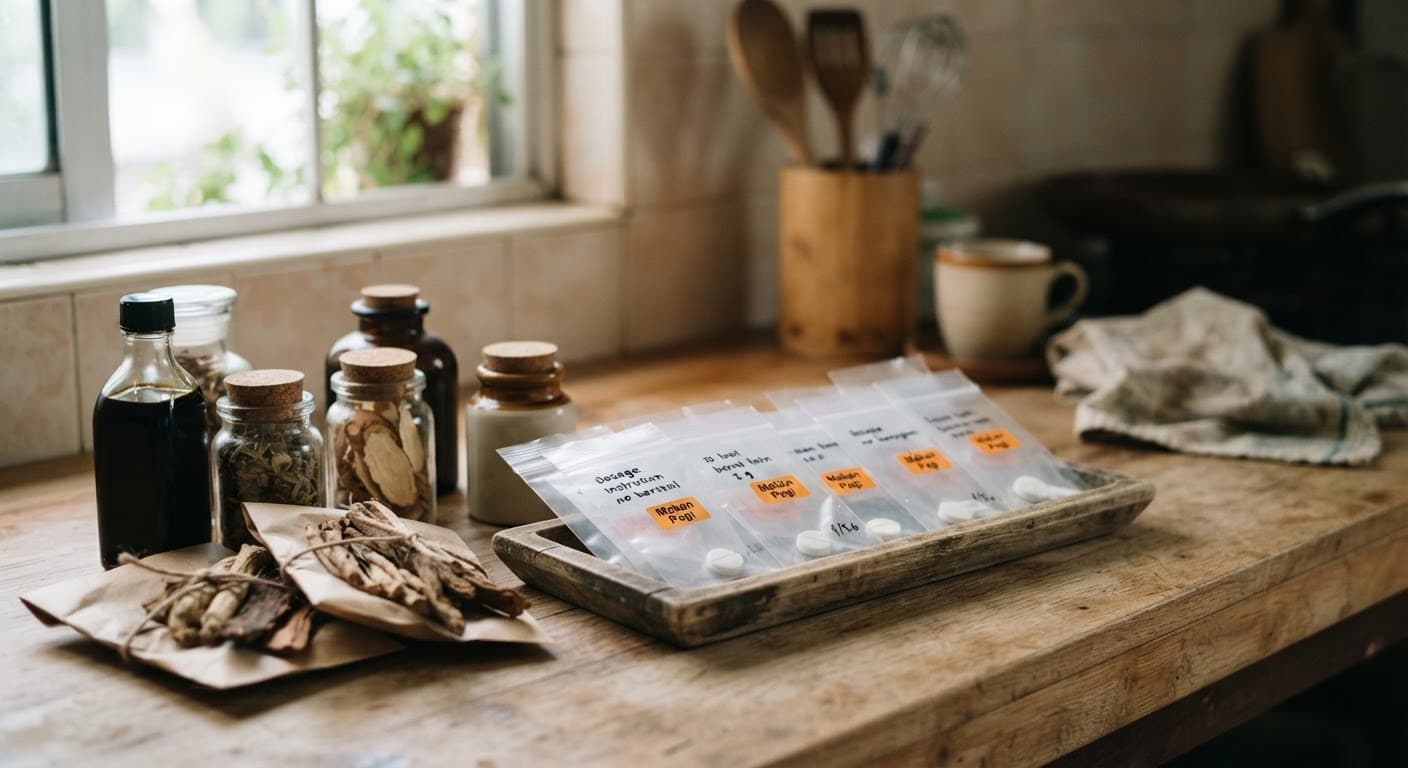
My mother kept her heart medication in a small pillbox and her tonics on a shelf in the kitchen, and for years nobody put the two together. She believed, as many of us do, that anything sold as a natural tonic sits outside medicine — helpful at worst harmless, and certainly not something to mention to the doctor. That is not true, and it cost us a review we should have had earlier.
I am not a pharmacist or a doctor. I am the son who eventually gathered all the bottles into a bag and took them to an appointment, which is the single most useful thing I did.
Why 'natural' is not automatically safe
A tonic is a set of chemicals, and chemicals interact with other chemicals. Some traditional preparations and supplements change how your body handles a prescription — making it stronger, weaker, or harder on a particular organ. The problem is compounded here because many products are sold in loose packets and bottles without a full ingredient list, and some imported tonics have been found to contain undeclared medicines on top of the herbs they advertise.
None of this means tonics are poison or that you must stop everything. It means they belong in the same conversation as your prescriptions, not in a separate cupboard.
The ones that most often matter
| Tonic or supplement | What it can affect | What to do |
|---|---|---|
| Ginseng | Can interact with blood thinners and diabetes medicines | Tell your doctor if you take it regularly |
| Herbal slimming mixtures, jamu | Often unlisted ingredients; can affect blood pressure and the liver | Avoid unlabelled products, especially imported |
| Tongkat ali and herbal 'male vitality' products | Unregulated; can carry undeclared drugs | Treat with caution and tell your doctor |
| Fish oil, high dose | Adds to the effect of blood thinners | Mention the dose, not just the name |
| Vitamin K and green supplements | Can blunt warfarin | Keep intake steady and tell your doctor |
| Grapefruit and some juices | Changes how certain statins and other drugs are handled | Ask before making it a daily habit |
| Unlisted imported tonics | Undeclared steroids or medicines | Check registration before buying |
How to raise it without being dismissed
Doctors are busy and cannot review a shelf they cannot see. What worked for us was making it concrete. We put every bottle, packet and box — prescription and tonic together — into one bag and brought it to the appointment, and asked one clear question: are any of these interacting with each other? The answer changed two things in my mother's routine within a week.
- Bring the actual containers, not a description of them
- Include everything — supplements, tonics, traditional preparations, vitamins
- Say the dose and how often, not just the name
- Ask specifically: do any of these interact?
- Ask about the ones you plan to start, not only the ones you take now
- Write the answer down, or ask for it in your record
The other habit worth building is checking registration before you buy. In Malaysia, products and traditional medicines that are registered carry a label with a registration number, and that number can be checked with the National Pharmaceutical Regulatory Agency. An unregistered imported tonic with no ingredient list is the one to leave on the shelf, however convincing the shopkeeper is.
The most useful appointment my mother ever had was the one where we emptied the whole cabinet onto the doctor's desk and asked what we were missing.
Read next
- Klinik Kesihatan or private specialist: which one, and when
How to get a medication review without paying private rates.
- Looking after your kidneys when you have diabetes
Some supplements matter more when the kidneys are involved.
- More in Health
Every condition, screening and prevention piece in one place.
Questions readers ask
- Do I have to stop my tonics altogether?
- Not necessarily. Many people continue some of them safely, but the decision should be made with your doctor or pharmacist knowing the full list. The risk is not the tonic alone — it is the combination, and the combination is what nobody can assess unless you show them everything.
- How do I check if a product is registered?
- Look for a registration number on the label, which registered products in Malaysia carry, and confirm it with the National Pharmaceutical Regulatory Agency. Be cautious with products that have no full ingredient list, no registration number, or claims that they cure a long list of conditions.