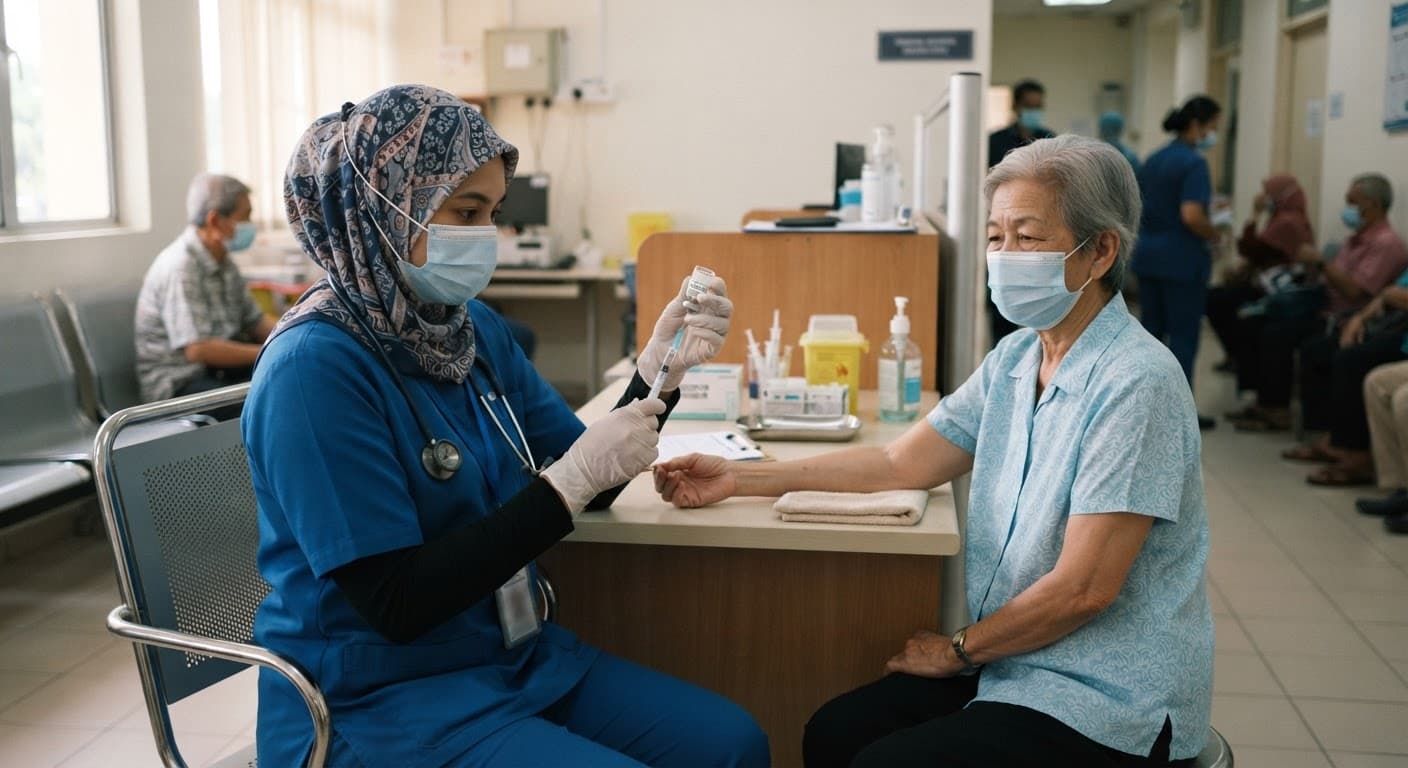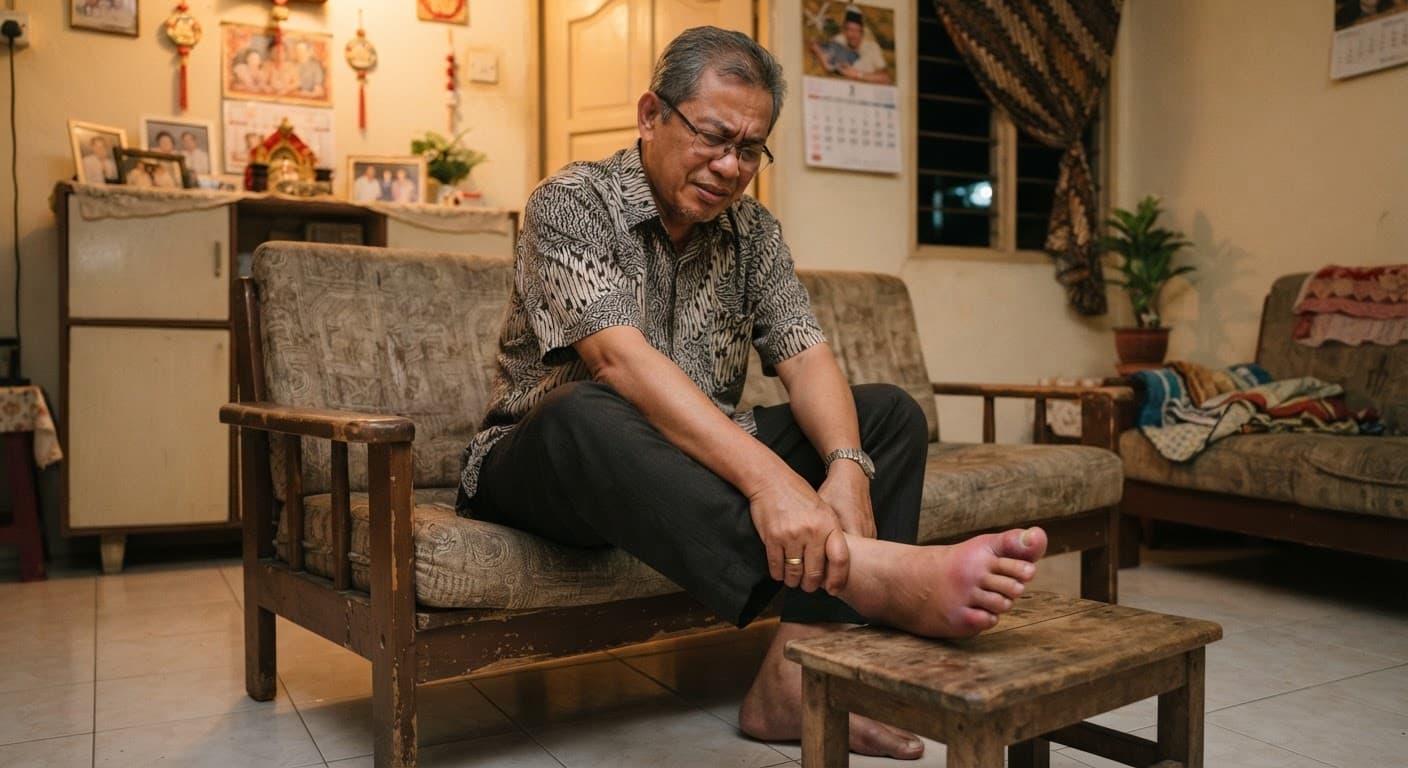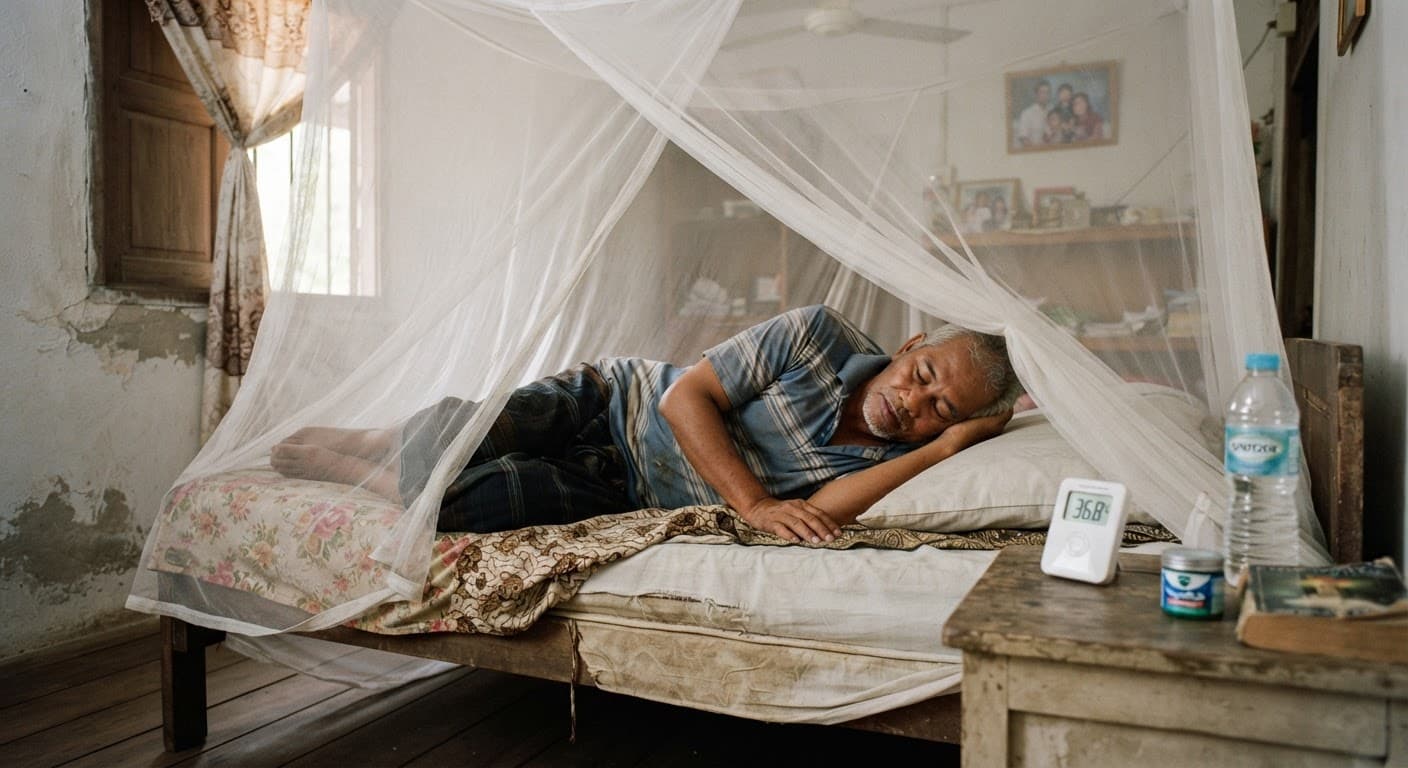
I had dengue at 41 and again at 53. The first time I was miserable for a week and got over it. The second time I was admitted for two nights and watched, because four days in the fever dropped and my blood count kept falling. That is the part people do not expect. The fever going away felt like a good sign, and it was the moment the doctor took most seriously.
I am not a doctor. This is what happened to me, and what the staff at the hospital explained afterwards, written so the next person recognises the turn of the week and does not wait at home for it to pass.
Why a second infection is the one to respect
Dengue is not one virus but four related types, and immunity to one does not protect you against the others. When you are infected a second time by a different type, the risk of severe dengue — the form that involves bleeding and a dangerous drop in blood pressure — is higher than the first time. That is the reason a repeat infection matters more as you get older, and why the doctor took my second round far more seriously than my first.
Malaysia is a dengue country. The Aedes mosquito that carries it bites during the day, breeds in clean water around a home — flower pots, drains, buckets, discarded containers — and clusters outbreaks in dense neighbourhoods during the rainy months. You do not catch it from another person.
The fever is not the dangerous part
The fever lasts a few days and is miserable but predictable. The danger window is roughly day three to day seven, often as the fever is falling. That is when the plasma in your blood can leak, your platelet count can drop, and bleeding can start. Feeling worse rather than better as the fever breaks is the signal. I felt the fever leave and felt strangely worse, cold and shaky, and that was when I was told to stay in.
What you can safely do at home
In the early days, before the danger window, the job is to rest, drink, and watch. Fluids matter — water, oral rehydration salts, clear soups. Plain water alone can be thin if you are sweating and vomiting, so keep a packet of rehydration salts at home during the season.
The medication rule is the one I would put on a wall. Anti-inflammatory painkillers that are perfectly fine for a headache can turn a dengue week into a bleeding problem, so reach for paracetamol and leave the rest of the cabinet alone. My own doctor repeated this to me twice.
It was not the fever that put me in hospital. It was the day the fever left and I started getting worse, and someone had told me to watch for exactly that.
There is a lesson about the home itself, too. After my second round I walked the outside of the house with a torch and found standing water in three places I never look at — an old drain tray, a stack of tins, and a bucket behind the water tank. Emptying those weekly during the rainy season is the part of dengue prevention that actually belongs to us.
Read next
- Heat, hydration and older bodies in the tropics
Why the same heat lands harder after 40, and the warning signs.
- Looking after your kidneys when you have diabetes
Reading the numbers your clinic already checks.
- More in Health
Every condition, screening and prevention piece in one place.
Questions readers ask
- How soon after the fever starts should I be seen?
- See a doctor early to confirm the diagnosis rather than self-treating through a fever, and go back — or go to hospital — if you feel worse as the fever drops, or if any of the warning signs appear. Dengue is confirmed with a blood test, and monitoring the trend of your blood count is part of the care.
- Can I get dengue more than twice?
- Yes. Because there are four types of the virus, you can be infected up to four times, and protection from one type does not cover the others. That is why repeat infection carries more risk than the first.