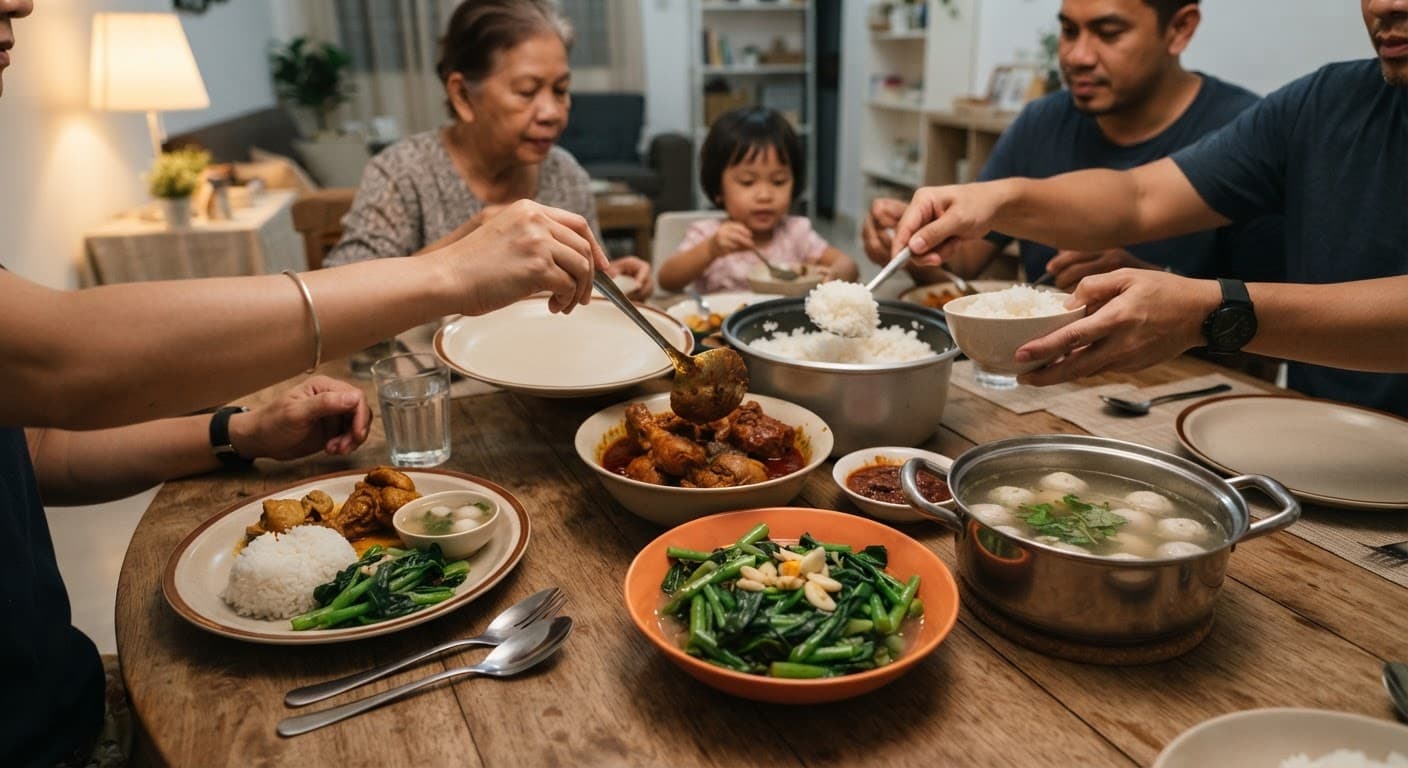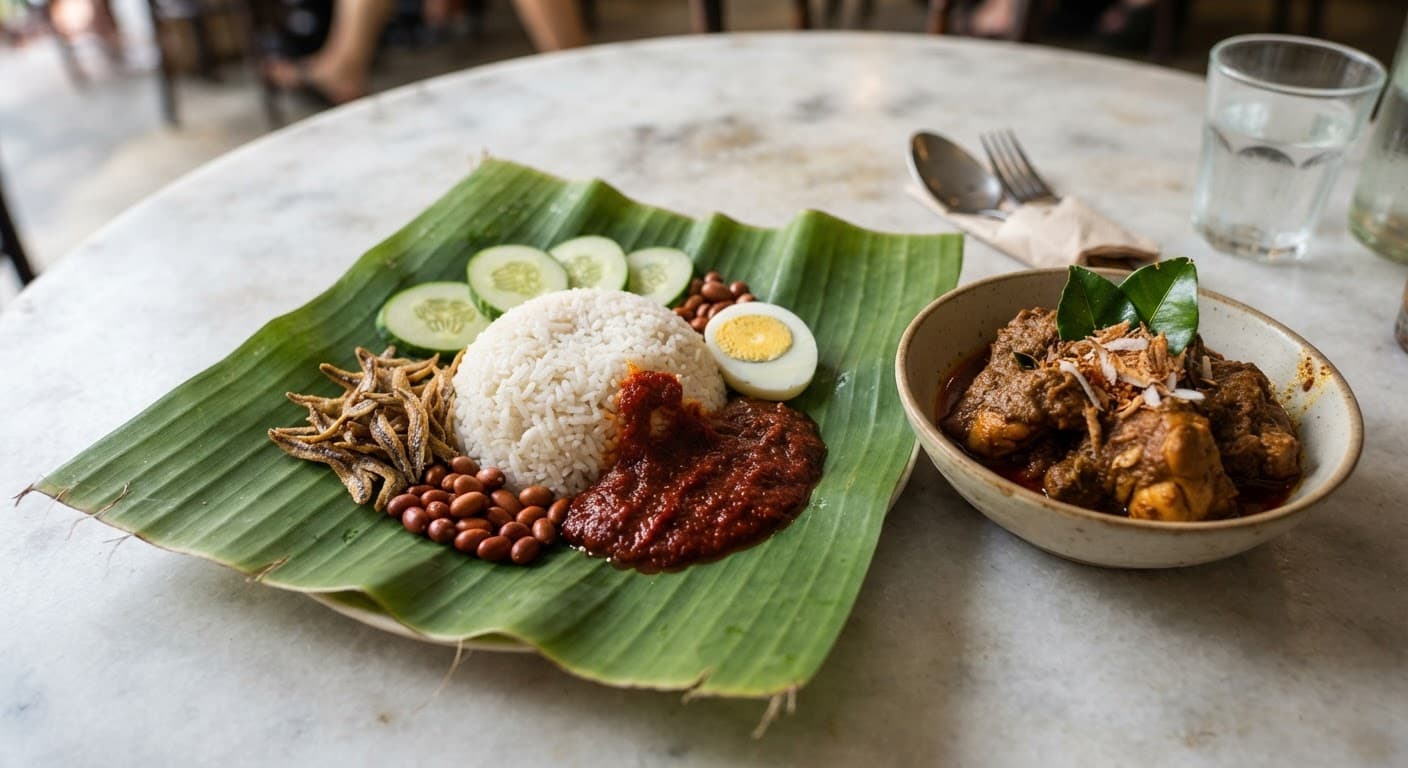
Telling a Malaysian in their fifties not to eat nasi lemak is not nutrition advice, it is a cultural instruction, and it will be ignored. The workable version changes four things and leaves the dish recognisable.
What to change
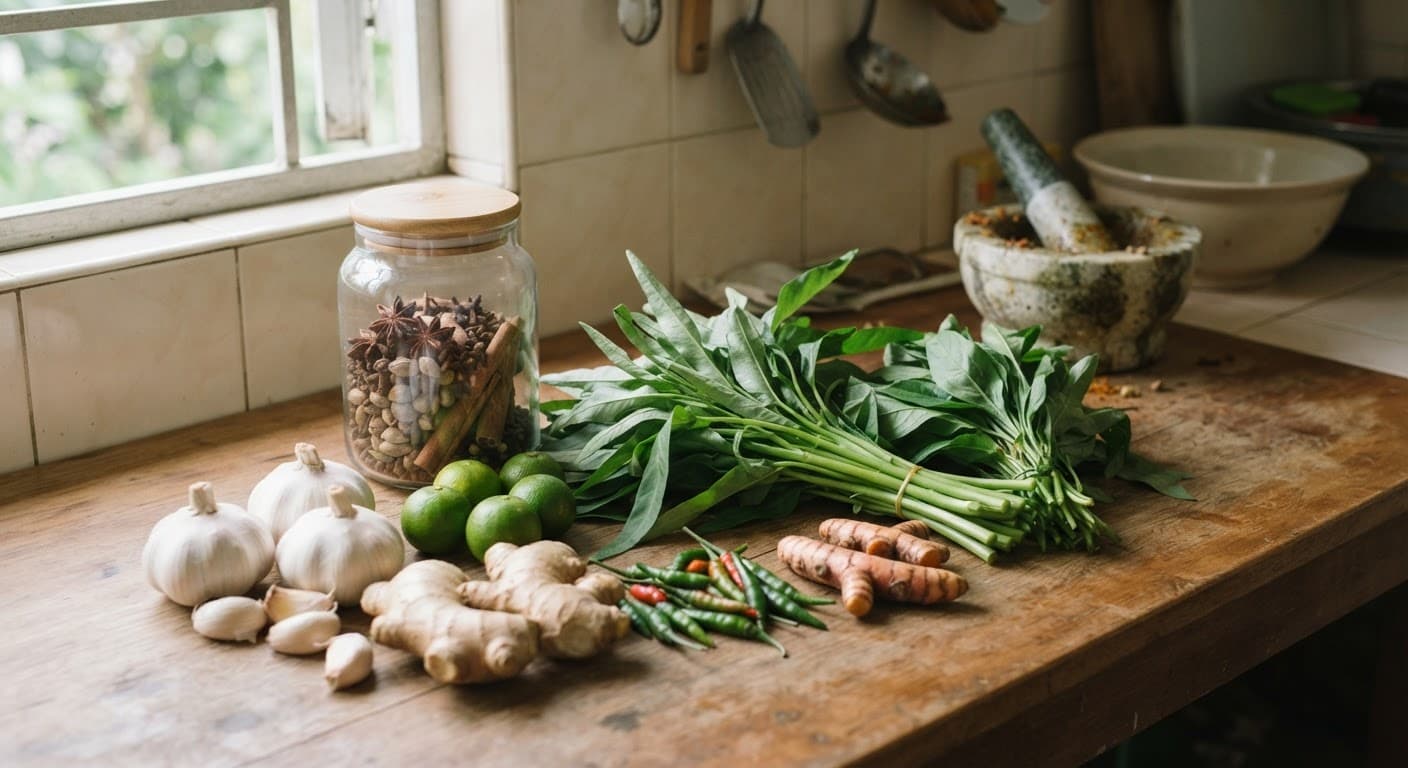
- Sambal: cut the palm sugar by two-thirds. The chilli, belacan and tamarind carry the flavour; sugar is doing less work than you think.
- Rice: cook with 30% less coconut milk and add a pandan leaf. Or cook half the volume and add a protein on the side.
- Protein: a piece of grilled fish, two eggs or a portion of tempeh alongside. Protein slows the glucose rise more than any rice substitution.
- Vegetables: cucumber is not enough on its own. Add a side of ulam or blanched kangkung, and eat that first.
The diagnosis changes the plate, not the cuisine. A kitchen that stops cooking the family's food is a kitchen that stops being used.
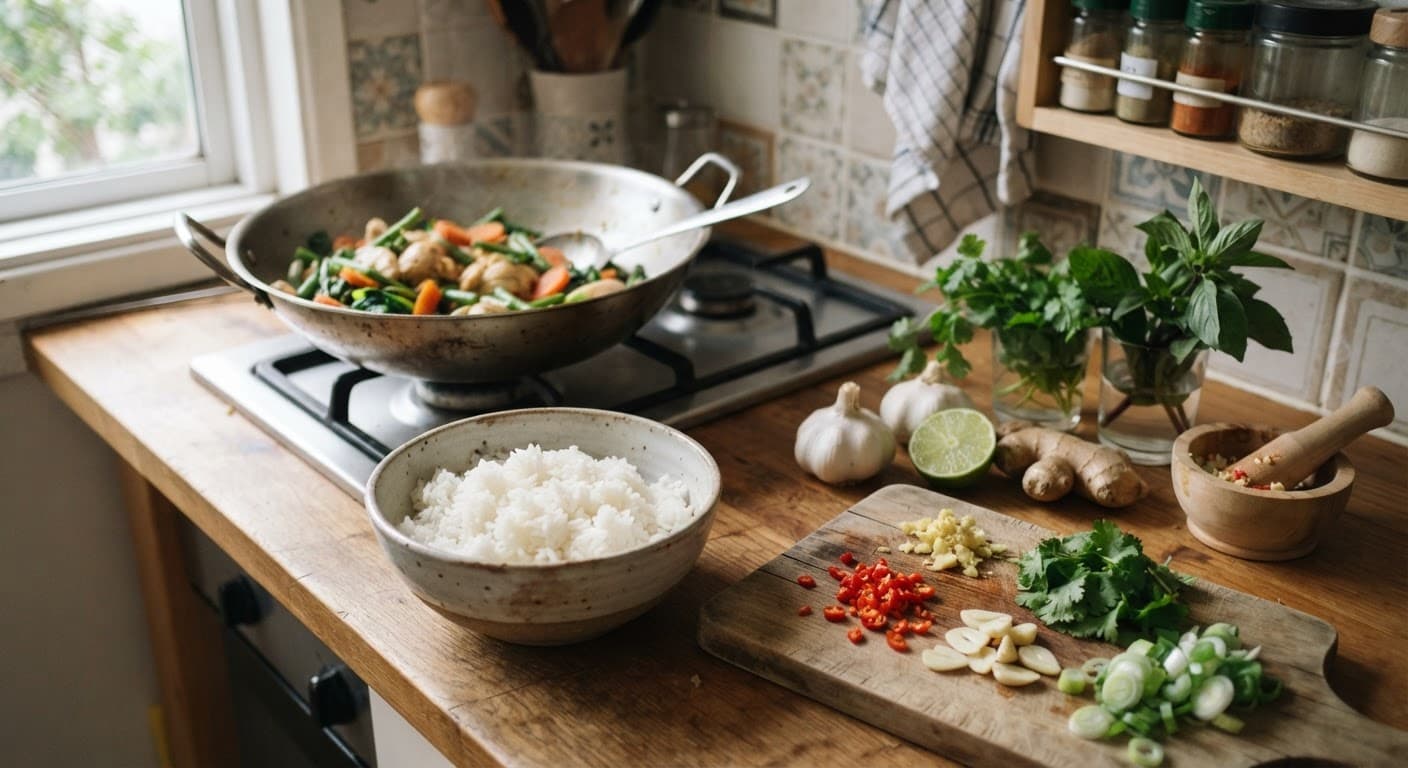
This applies well beyond nasi lemak. Kuey teow, mee goreng and roti canai can all be adjusted on the same principles: reduce the sugar, add protein, add vegetables, eat them before the starch. Note this guidance is general — if you are on insulin or have kidney involvement, ask your doctor or dietitian to set your own targets.
Questions readers ask
- Can I eat rice at all?
- Yes, and the portion matters more than the type. A fist-sized serving with protein and vegetables eaten first produces a much slower glucose rise than the same rice eaten on its own. Test two hours after a meal to see how your own body responds, because individual responses to rice vary more than any general rule admits.
- Is brown rice worth switching to?
- It helps a little — a lower glycaemic index and more fibre — but a large portion of brown rice still raises glucose, and many people find they eat more of it because it feels healthier. If the switch means you enjoy the meal less and eat the same quantity, fixing the portion is the better trade.
Read next
- Heritage recipes we are losing, and the cooks who keep them
Three family dishes, reconstructed before they disappear.
- More in Food
Malaysian cooking, adapted for the conditions that arrive with age.