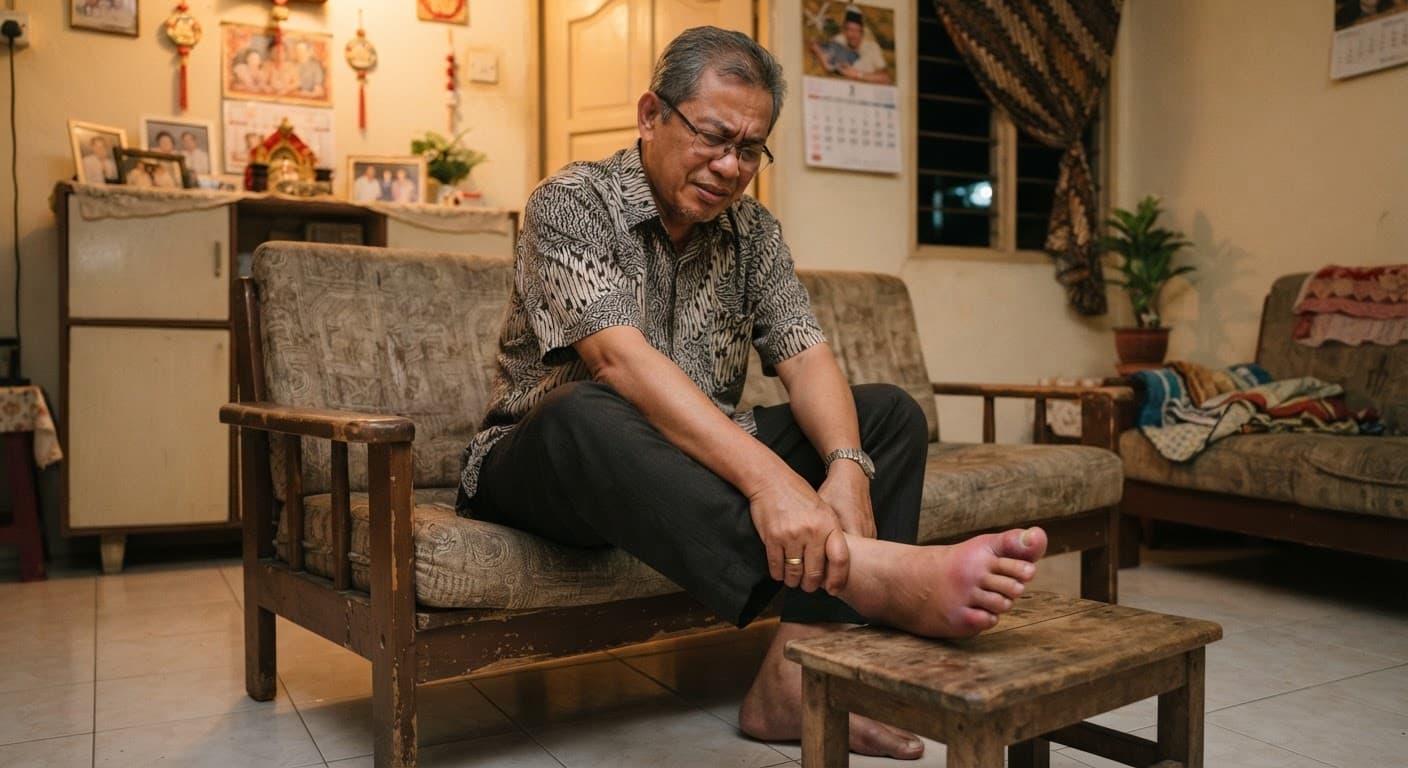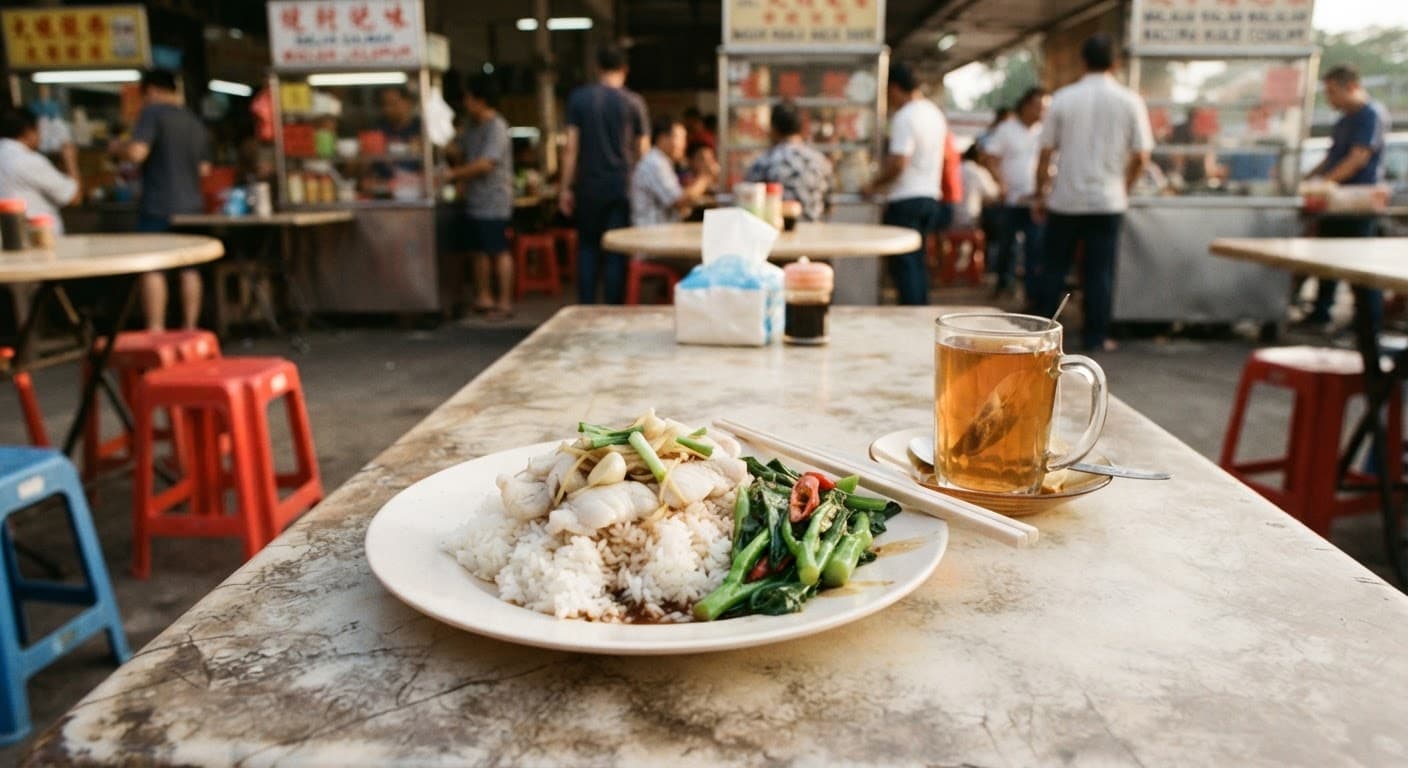
The advice I got when I was diagnosed told me to eat more vegetables and less sugar. True, and completely useless at 8am when I am standing at the drinks stall with a queue behind me. I have had type 2 diabetes for eleven years and I still eat out most days, because that is how life works here. What changed is that I learned where the sugar and the starch actually hide on a Malaysian menu, and I stopped feeling like I had to choose between my health and my breakfast.
The drinks stall is where the sugar hides
For me the drink was the biggest single fix, and the easiest. A teh tarik or a kopi is not just coffee or tea — it comes with condensed milk, and often a lot of it. Add the sugar and it is a sweet dessert in a cup, before any food arrives. The same goes for sirap, cordials, canned drinks and the popular bubble teas. I did not give up the stop at the drinks stall; I changed what I order.
| Usual order | What it brings | What I order now |
|---|---|---|
| Teh tarik / kopi | Condensed milk plus sugar | Teh or kopi 'o', kosong, or milk with less sweet |
| Sirap bandung | Rose syrup and evaporated milk | Plain water or iced Chinese tea |
| Canned drinks, cordials | High sugar, easy to drink fast | Water, or unsweetened tea |
| Bubble tea | Sugar plus starch in the pearls | Rare, small, no pearls |
| Fresh juice | Natural, but still a sugar hit | Whole fruit instead |
Rice is about portion, not prohibition
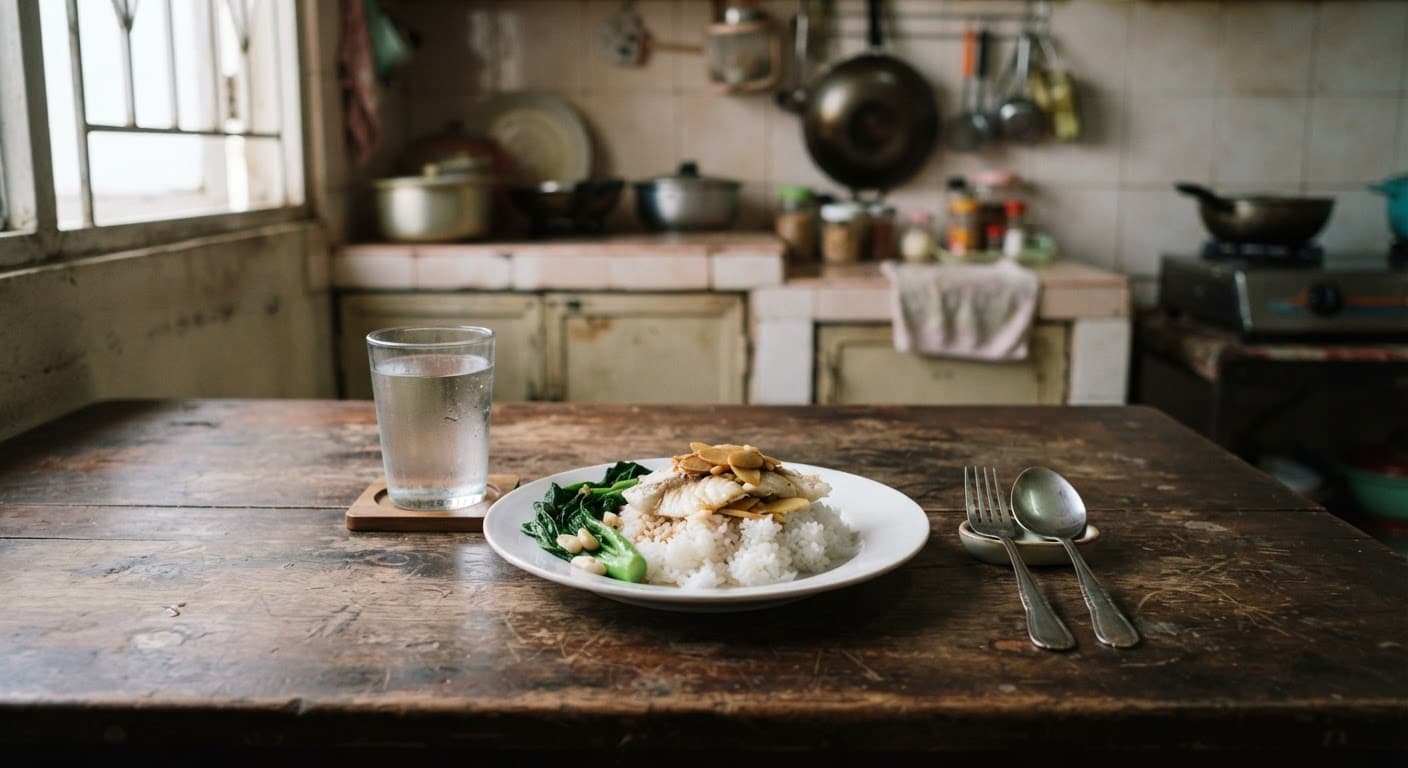
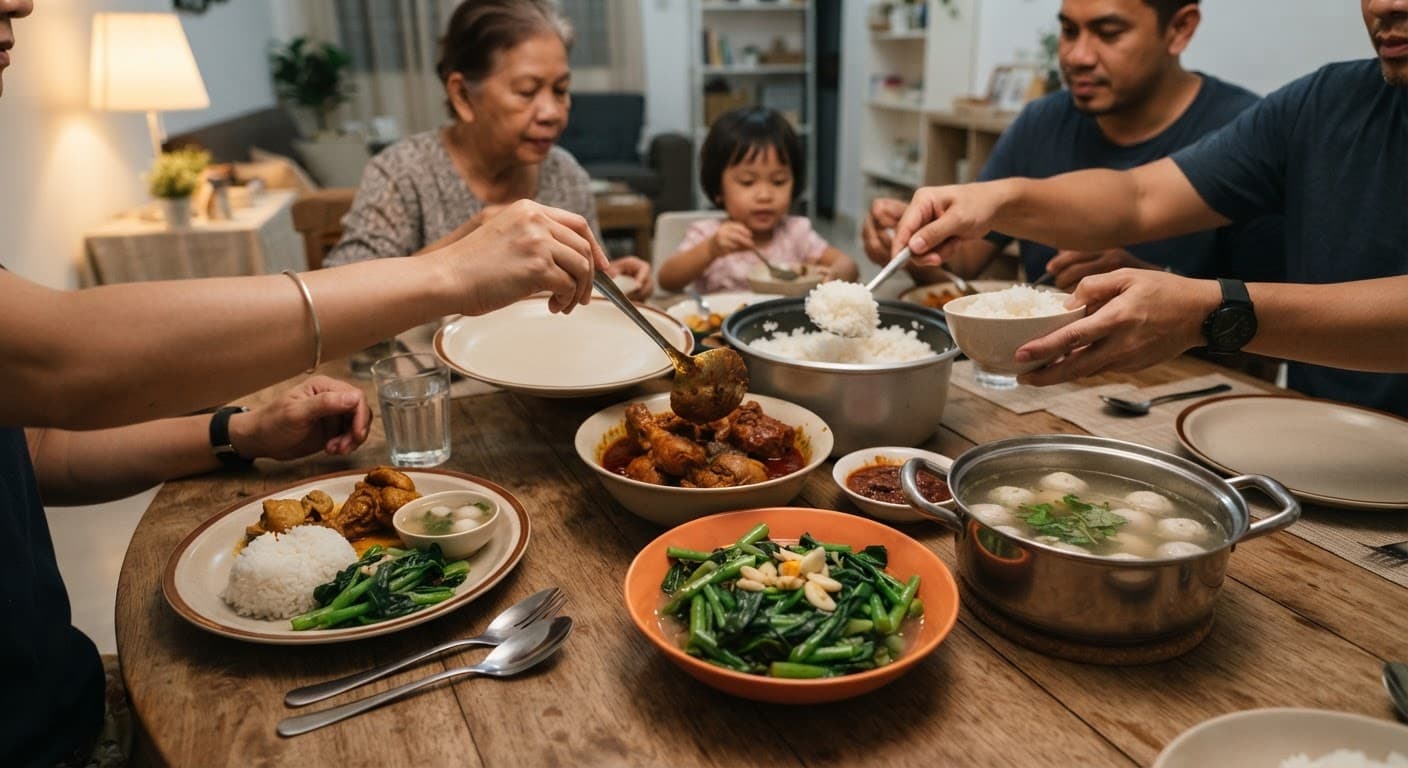
Nobody in my family is going to stop eating rice, and I would not ask them to. The lever that works is the portion and what sits next to it. A mountain of white rice with a little meat and no vegetables spikes me far more than a normal portion with plenty of vegetables and protein alongside. I ask myself a simple question before I sit down: how much rice, and what is going with it.
- Ask for less rice — most hawkers will give you a smaller scoop without a fuss
- Choose brown rice or a mix where it is offered, but do not skip rice entirely if it leaves you hungry and snacking
- Add vegetables and a protein to every meal — egg, tofu, fish, chicken
- Watch the gravies and sauces; they carry sugar and salt you cannot see
- Eat in order if you can — vegetables and protein first, then the rice
Building a plate at nasi campur
Nasi campur is actually the easiest place to eat well, because you choose each item. My rule is one rice, one protein I recognise, and two vegetables. I avoid the dishes swimming in sweet sauce, the fried items coated in batter, and the gravies I would pour over everything. I take the soup if it is clear rather than creamy.
Ordering without making it a scene
For a long time I did not want to be the person asking questions in front of friends. I got over it by keeping the ask short and normal: kurang manis for the drink, sikit nasi for the rice, sayur banyak for the vegetables. Staff in Malaysian coffeeshops hear these requests all day. The trick is to order it confidently the first time, so it becomes your usual rather than a negotiation every visit.
Eating out will never be the thing that fixes my diabetes. But it is where most of my meals happen, so it has to be part of the plan rather than the thing I fail at. The other habits — the medication, the walks, the numbers at the clinic — still do the heavy lifting. This just stops the food from working against them.
I did not give up the hawker centre to manage my diabetes. I learned which stalls and which orders let me keep it.
Read next
- Looking after your kidneys when you have diabetes
The numbers behind the everyday choices, in plain terms.
- Traditional tonics and supplements that clash with your prescriptions
What to check before adding a tonic to the routine.
- More in Health
Every condition, screening and prevention piece in one place.
Questions readers ask
- Is brown rice worth the extra cost?
- It digests more slowly than white rice and can help keep blood sugar steadier, so if you like it and can afford it, it is a reasonable swap. But portion size and what you eat with the rice matter at least as much, so do not feel you have failed if you are still eating white rice in a sensible portion.
- Can I ever have a teh tarik again?
- That is a personal choice and one to weigh against your own blood sugar readings. Many people keep it as an occasional treat rather than a daily habit, and ask for it less sweet when they do. If your readings run high, that is worth a conversation with your doctor or dietitian.