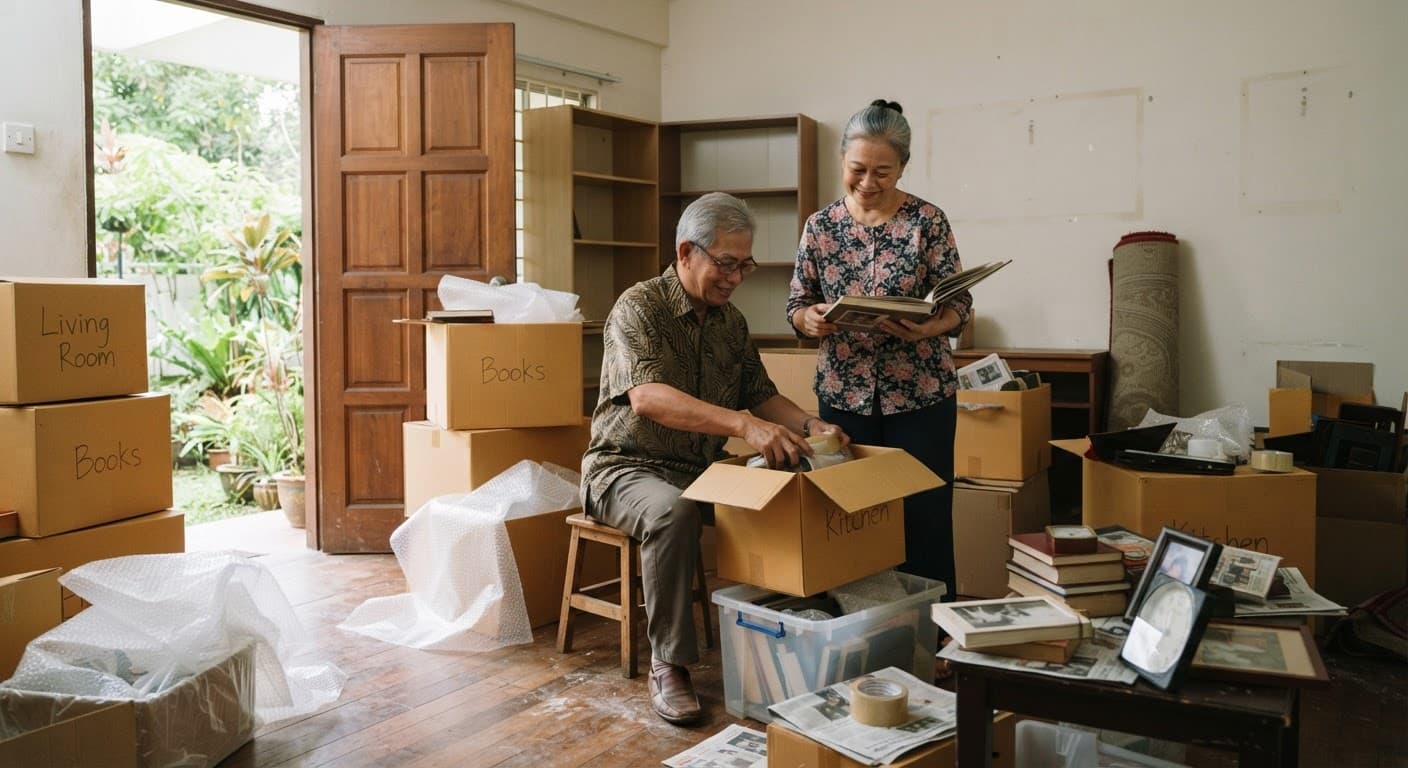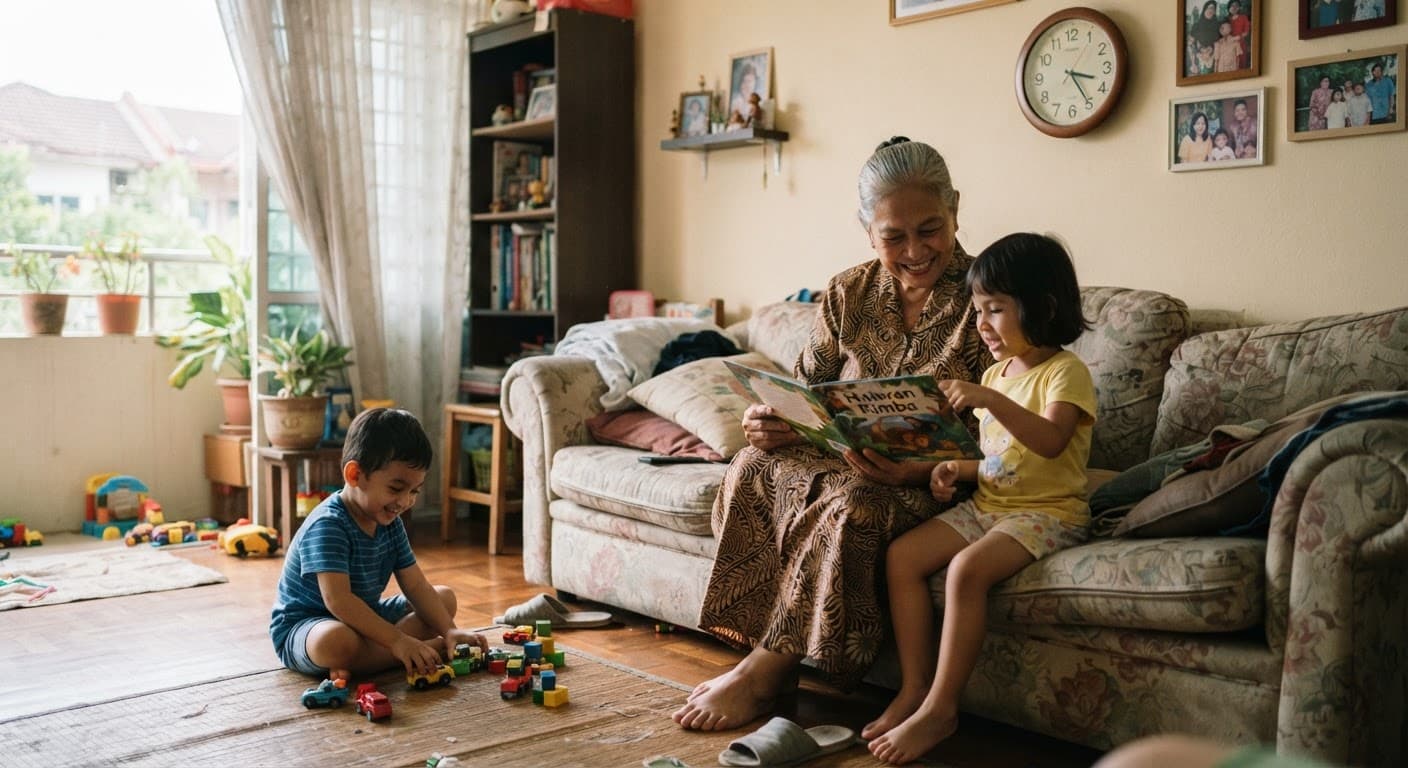
The grandchildren live in Singapore, and the distance is not the problem most people imagine. It is forty minutes by flight. The problem is that a child's life moves faster than a visitor's calendar, so the moments that matter keep happening on an ordinary Tuesday.
Readers with grandchildren in Singapore, Johor or further afield describe the same drift: the visits are joyful and too rare, the video calls are awkward, and a whole relationship is left to survive on school holidays alone.
Make the contact rhythmic, not spontaneous
Children build attachment through repetition, not intensity. A call at the same time every week does more for a relationship than three spontaneous calls in a good month and then nothing for six weeks. Pick a slot the child's household can actually keep, and keep it even when there is nothing to say.
- One fixed video call a week, same day, ten to fifteen minutes — short and reliable beats long and rare
- A shared photo album the parents add to daily, so you are part of the ordinary week and not only the events
- A bedtime story read over video twice a month, for grandchildren young enough to want one
- A short voice message sent to the child directly rather than routed through their parents
Being known to a grandchild is built the way any relationship is built — by turning up often enough that you become part of the furniture.
When it is worth saying something
If the visits keep slipping, say it plainly once, without blame. Adult children with young families are genuinely stretched, and most respond far better to a specific request — one weekend a quarter, dates fixed a year ahead — than to a general wish to see more of them. A concrete arrangement is easier to say yes to than an open-ended one.
Questions readers ask
- How often should we visit without becoming a burden?
- Four times a year, fixed in advance, works for most families across the Causeway and is easier on everyone than frequent unplanned trips. What matters far more is the weekly contact between visits. Grandchildren remember the relative who turned up in the ordinary weeks, not the one who appeared at every celebration.
- What if my son or daughter never calls us?
- Ask for something small and specific rather than raising the general pattern — a ten-minute call on a set evening, or one photo a day in a shared album. A concrete request is easy to say yes to and easy to keep. A criticism of how little they call is neither, and it usually produces an apology rather than a change.
Read next
- Going back to work at 60, on your own terms
What returning to paid work takes, and what it gives back.
- More in Lifestyle
Purpose, family and the decade after retirement.